
Bushcare’s Melaleuca Wetlands assisted regeneration project | Part 1
By Angela Hoskins
The importance of the Melaleuca Wetlands on
Coochiemudlo Island
In October 1993, the Melaleuca Wetlands on Coochiemudlo Island became a Moreton Bay Ramsar site which means it is recognised as a ‘Wetland of International Importance’.
Wetlands need to be protected. The world’s wetlands are among the most effective carbon sinks on Earth (Department of Climate Change, Energy, the Environment and Water).
Back in August 2025 during National Biosecurity Week, we published an article highlighting the problem of invasive and environmental weeds on the island, specifically around the Melaleuca Wetlands and on the Emerald Fringe. This article was spurred on after much discussion within the community about the problem growing and spreading right before our eyes.
Environmental weeds dominate boundary areas of bushland and their invasive, virulent nature means that, left unchecked, they spread deeper into the bush to overtake native species. Local governments receive regular communications from concerned citizens about bushland in their area being overtaken by weeds. The officers’ response too often sidesteps the issue because of lack of resources for tackling what is a huge and widespread problem: Environmental weeds are omnipresent, widespread, virulent, and they require ongoing attention. In the too hard basket.
All over Australia, wherever there are residential gardens nearby, environmental weeds invade natural bushland and farmland. It takes local communities and volunteers to partner with government bodies and NGOs to tackle these problems.
That’s why Australia’s landcare groups are vital for looking after our natural environment. There are hundreds of environmental volunteer groups listed in the National Landcare Directory, two of which are registered on Coochiemudlo Island: Bushcare and Coastcare.
Bushcare’s project to help protect the Melaleuca Wetlands
The yellow outlined area marks the Ramsar protected area in the Melaleuca Wetlands that covers 11.75 hectares. Protection is by international covenant and can be revoked if our wetlands suffer species loss or becomes degraded. Its status as a safe haven for native plants and animals is now under threat from invasive weeds and an undeniable decline in its diversity. Expert research and observations by long-term residents indicate the ecological health of the wetlands is in decline [Graphic created by Coochiemudlo Bushcare convenor and island resident, Peter Wear.]
Coochiemudlo Bushcare works in partnership with Redlands City Council. In October 2025, three Bushcare volunteers met with Council environmental officers to discuss a shift of their work focus from the island’s coastal zones to tackle the significant weeds that surround bush around the Melaleuca Wetlands. Progress has been made since that important meeting in October: subsequent onsite meetings have resulted in a strategy to start the assisted regeneration project on the Innes Street boundary of the Wetlands.
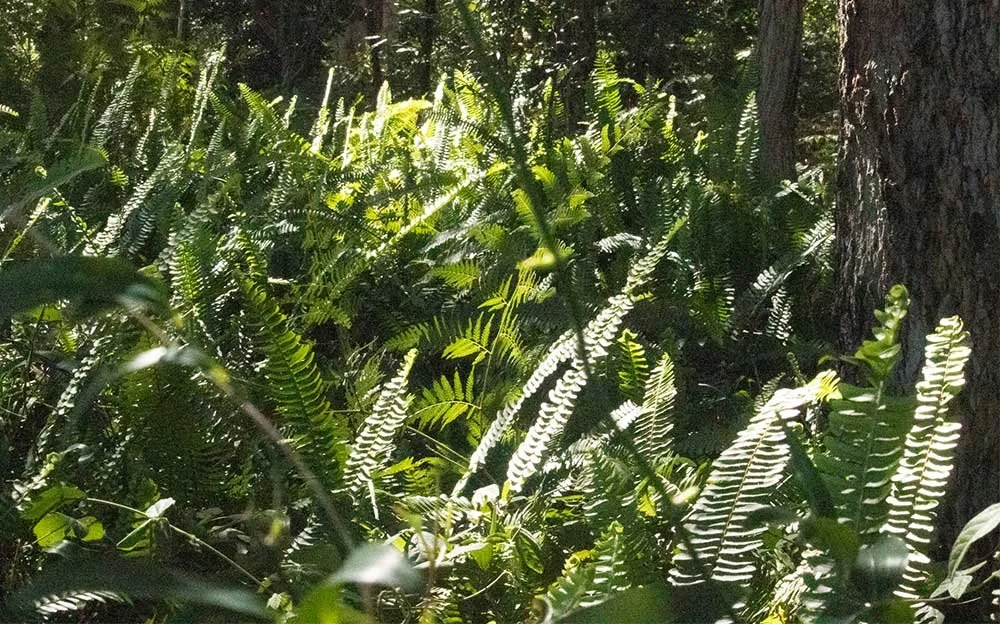
The first working bees have focused on clearing corky passion vine and ground weeds where the road verge meets the bush. Registered regeneration contractors will then tackle large weed trees, and the infestations of Fishbone fern and Singapore Daisy.
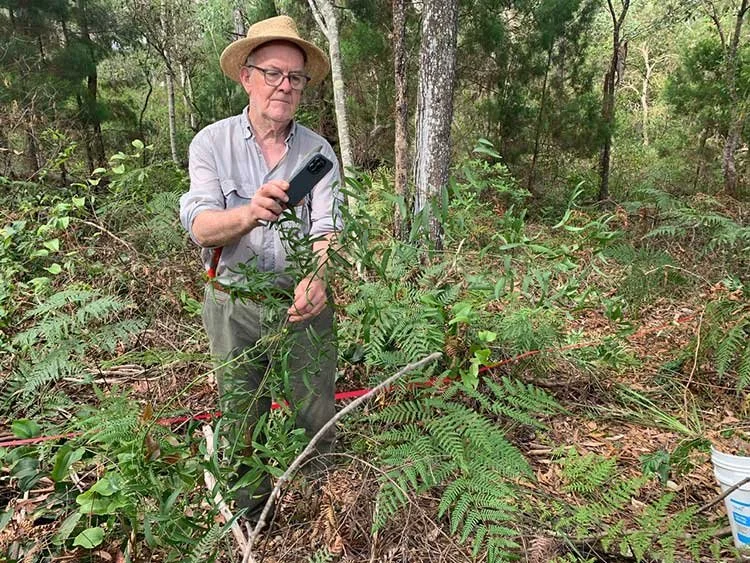
Peter Wear, Bushcare convenor, using the iNaturalist app on his smart phone to identify plant species.
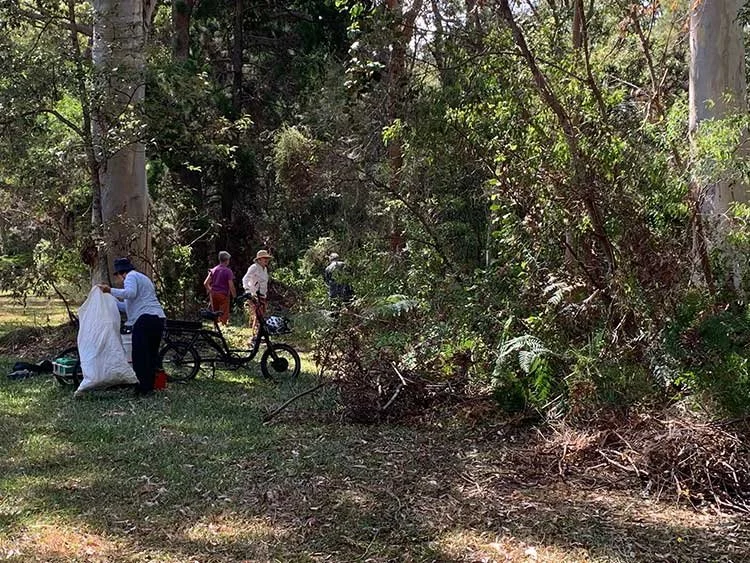
Bushcare workers on Coochiemudlo Island working on eliminating weeds on the boundary of the Melaleuca Wetands on Coochiemudlo Island.
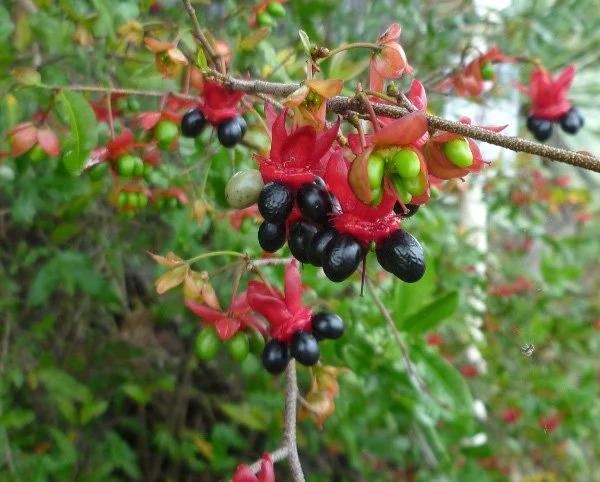
The work in this zone has been attentive and careful, without leaving bare soil for more invasives to take hold. Attention is given to the species in the area to make sure weeds are correctly identified. In January 2026, Bushcare volunteers were invited to an onsite mini-workshop to learn how to use the iNaturalist app on their smart phones to help identify both native species and environmental weeds.
Small native species have been found amongst the weeds and these now have more breathing space while keeping the area covered with leaf-litter mulch.
What is heartening is the impressive diversity of native species deeper in the bush towards the Melaleuca Wetlands, away from the weed infested boundaries.
Tackling weed problems in the natural environment takes strategy and due process. Communities diving in, boots and all without a strategy or expert advice can often result in bare earth — after their hard work pulling weeds — opened up for more environmental weeds to take root.
Education, gaining knowledge of due process and a strategy, is important.
Without community awareness of invasive species in their area, and how to dispose of garden waste properly, the weed problem in our bushland will continue and be more difficult than it needs to be.
Thanks to Peter and Rae Wear for editing help with this article.
Peter Wear is the Coochiemudlo Bushcare convenor.
Singapore daisy and mother-in-law-tongues growing deeper into the Melaleuca Wetlands, Innes Street border.