
Ochna: An environmental weed and how to control it
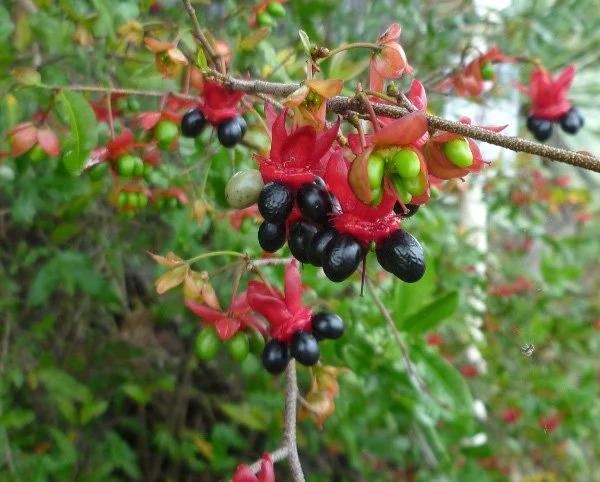
Ochna serrulata
Council areas across South East Queensland and northern NSW list ochna (Ochna serrulata) as a significant environmental weed. Moggill Creek Catchment Group include ochna in their list of the six worst environmental weeds in their catchmment. Redlands Indigiscape’s brochure, Environmental Weeds, notes that ochna seeds germinate readily in deep shade, that it reshoots when cut back if not treated, and that it is spread mainly by birds and humans.
On Coochiemudlo Island, ochna is growing in residential gardens and on the sides of roads. It has spread into the Emerald Fringe. On the nature strip along Elizabeth Street, there are tall ochna shrubs growing near the Melaleuca Wetlands periphery where it has also taken hold. Ochna is one of the worst woody weeds targeted in Coochiemudlo Bushcare’s assisted regenerative project along their Innes Street work zone where contractors have recently been employed to eliminate it.
Ochna may have first been planted on the island by choice because of the ornamental flowers: it’s also known as Mickey Mouse plant because of the mature flowers — red petals around multiple large black seeds. Birds love the seeds, another reason why this plant is so easily spread from garden to garden, whether you choose it or not.
Once it becomes established, ochna is difficult to get rid of because of the tough, deep, hooked tap root. If the root remains in the soil, it can easily regenerate.
How to get rid of it
Logan Council produced the following informative video on how to control ochna on your property.
Non-chemical control
Ochna that is under 15 cm tall can be successfully dug out, especially when soil is moist. Care needs to be taken so that as much tap root is removed as possible as plants can regenerate from tap root material that is left in the soil.
Put unearthed or discarded ochna in general rubbish. Seeds must be tightly sealed in plastic before discarding.
If ochna remains growing in your yard, cut off the flowers before seed is set and discard in your general rubbish. Ochna seeds or fruiting branches should not be discarded into green waste tips, garden mulch, or compost piles.
Chemical control
Plants respond to herbicide treatments, best applied during the spring-summer growing periods. Cut and paint is the safest method. Follow-up control is often necessary as plants can re-shoot after treatments.
Why is it an environmental weed?
Native ecosystems: Ochna serrulata is an invasive species and can establish in both undisturbed and disturbed bushland. Large dense infestations can develop that prevent native understorey plants from growing. (Weeds Australia).
Its country of origin is South Africa.
This article outlines the inception of Bushcare’s project on the Melaleuca Wetlands, progressing with a weed elimination strategy and the start of the first working bees.